
Best Swing Trading Brokers With Managed Accounts 2026



Swing trading thrives on timing and flexibility—but when you’re trusting a managed account, the broker you choose becomes just as important as the strategy itself.
We break down the best swing trading brokers with managed accounts, so you can align with a partner that matches your trading goals and risk profile.
How SwingTrading.com Chose The Top Managed Account Brokers
We selected the best brokers for managed accounts by comparing the types of account management offered (from PAMM and MAM setups to fully managed portfolios), assessing fees, transparency, and performance data, then testing the onboarding and usability ourselves.
By combining objective analysis with hands-on experience, we highlighted brokers that offer reliable, well-structured managed account solutions rather than just marketing claims.
How To Choose A Broker For Managed Trading Accounts
- Minimum investment requirements: The entry threshold determines how much capital you need to access a managed swing trading account. Higher minimums may limit beginners but often come with more tailored management, while lower entry points offer flexibility but fewer customised services.
- Fees & transparency: Costs like management and performance fees can eat into swing trading returns. Transparent brokers clearly outline charges so you know exactly what you’re paying for and can judge whether the service justifies the expense.
- Strategy & trade selection: A manager’s swing trading approach—how they pick assets, manage risk, and time entries—directly shapes performance. Look for a structured, disciplined strategy that aligns with your goals and risk tolerance, not one driven by emotion or guesswork.
- Track record: Past results reveal how well a manager’s swing strategy performs across different markets. Consistency, risk-adjusted returns, and handling of volatility are more telling than headline gains.
- Reporting & support: Clear performance reports and analytical tools give insight into your account’s progress, while responsive customer service ensures you stay informed and supported as your financial needs evolve.
- Regulation & safety nets: Brokers regulated by the FCA, CySEC, and ASIC must meet strict standards, while local insurance protections like FSCS in the UK helps in case of broker failure. Together, these safeguards help ensure your capital is secure and professionally managed.
I quickly learned that the broker matters as much as the account manager. Slow execution, hidden fees, or limited flexibility can kill a swing trading strategy. The right broker ensures reliable trades, transparent reporting, and a platform that supports the account manager’s edge.
What Is A Managed Trading Account?
A managed swing trading account is a professionally run trading account where an experienced trader or money manager executes swing trades on your behalf. Instead of you scanning charts, spotting setups, and pulling the trigger, a manager applies their expertise and strategy to capture short- to mid-term price moves in the market.
This setup is ideal if you want exposure to swing trading opportunities but prefer a more hands-off approach. The manager tailors the trading style to your risk tolerance, capital size, and overall financial objectives—whether you’re aiming for steady growth, aggressive returns, or balanced risk management.
Unlike traditional investing, where decisions are often long-term and gradual, swing trading managed accounts are more active. Managers rely on technical analysis, market research, and disciplined trade execution to enter and exit positions in assets like stocks, ETFs, or forex pairs.
Most accounts operate on a discretionary basis, meaning the manager can place trades without waiting for your approval, though management fees apply.
Beyond convenience, managed accounts offer benefits like tax efficiencies, custom portfolio design, and direct ownership of assets—all while giving you exposure to a swing trading strategy without needing to manage the day-to-day execution yourself.
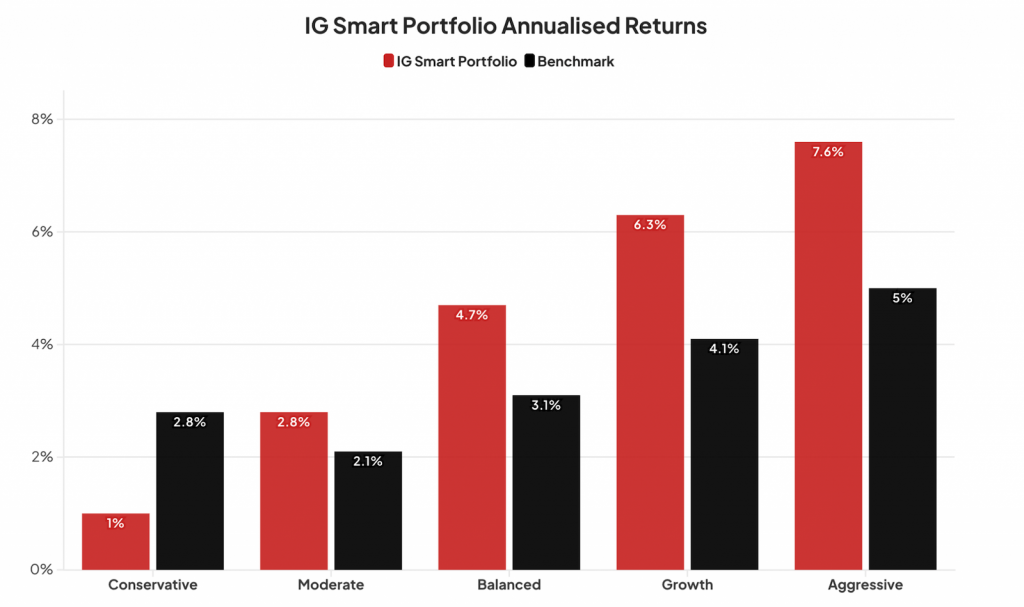
IG’s Smart Portfolios offer managed accounts for hands-off swing traders
Is A Managed Swing Trading Account Right For You?
A managed swing trading account is best suited for individuals who want to benefit from short- to medium-term market moves but don’t have the time, skillset, or confidence to trade actively themselves.
This option appeals to busy professionals who can’t monitor charts all day, high-net-worth clients who prefer delegating to specialists, and newer traders who’d rather rely on expert execution than trial and error.
It can also fit traders with bigger-picture goals—such as steady income, long-term growth, or protecting capital—since professional managers apply strict risk controls and disciplined trading rules to align swing strategies with broader financial objectives.
If you value active portfolio management and structured strategies, a managed swing trading account can combine peace of mind with exposure to opportunities you might otherwise miss.
Pros Of Managed Trading Accounts
- Professional risk management: Managers use tools like volatility-based sizing, ATR stops, and diversification to control risk—helping avoid oversized trades and emotional mistakes that often erode retail accounts.
- Consistent, rule-based execution: With systematic strategies and algorithmic screeners, managers remove hesitation and emotional bias, ensuring trades are executed with discipline across market cycles.
- Broader market access: Professionals leverage institutional tools and scan thousands of assets for quality swing setups, providing wider opportunities and avoiding the ‘forced trades’ many retail traders fall into.
Cons Of Managed Trading Accounts
- Fees reduce returns: Management and performance fees can erode the small, compounding gains that swing trading relies on, leaving net returns lagging passive options in specific markets.
- Limited transparency & control: Trades are placed at the manager’s discretion, so you may not know the rationale behind entries or exits—frustrating if you value visibility and strategy alignment.
- Strategy drift & market sensitivity: Performance can falter in choppy markets or if managers stray from their core edge. Over-reliance on one asset class can also stall returns when conditions shift.
Choosing a broker isn’t just about fees—it’s about tools and support. I’ve seen accounts underperform when platforms couldn’t handle quick adjustments. An intuitive, responsive, and reliable broker makes all the difference.
Bottom Line
Managed swing trading accounts offer a practical way to tap into short- to medium-term market opportunities without the demands of active trading.
The right broker provides the tools, oversight, and professional management needed to align strategies with your goals, but fees and limited control should be carefully weighed.
Choosing the best swing trading broker with a managed account ultimately comes down to balancing convenience with performance, transparency, and cost.