
Best Swing Trading Brokers For Cent Accounts 2026



A cent account makes it easier to start small, since your balance shows in cents and lets you manage risk with tiny steps. However, not every broker’s cent account is well-suited for swing trading.
Dig into our pick of the best swing trading brokers with cent accounts – tested by our experienced traders and industry experts.
How SwingTrading.com Chose The Top Cent Accounts
We selected the best cent accounts by first sorting brokers by their overall ratings, blending key swing trading data points, such as spreads, execution quality, and leverage options, with our team’s hands-on testing insights.
This combination of quantitative analysis and practical experience ensured our recommendations reflect both performance metrics and real-world usability.
What To Look For In A Cent Account
Swap & Overnight Costs
Swing traders almost always face overnight charges. Every time you roll a position past midnight, the broker applies a swap fee. Some pairs might even give you a small credit, but most of the time you’ll be paying.
On a cent account, these costs can look small at first, but they stack up quickly if you hold trades for a week or two. A strategy that looks profitable on paper can lose its edge once swaps are included.
What to look for:
- A broker that posts clear daily swap rates.
- Information on how rates are calculated.
- Options for swap-free accounts, if available.
If the broker hides swap details or changes them often, it’s harder to plan swing trades with confidence.
I didn’t notice overnight charges on my account at first, but after holding forex trades for a week, the swaps added up and taught me to factor time into every plan.
Execution Quality
Fast execution isn’t as critical for swing trading as it is for scalping—still, order quality matters. If a stop order doesn’t trigger where you planned, you could end up with a worse entry or a bigger loss.
On cent accounts, some brokers run trades on less expensive infrastructure, which can result in more re-quotes or slippage. Over a series of trades, this adds up.
What to look for:
- A record of stable execution with minimal delays.
- Limit and stop orders triggering correctly.
- Few complaints about re-quotes.
Smooth execution won’t make or break every trade, but it keeps your strategy consistent.
Spreads & Commissions
Every trade starts with a cost: the spread. For swing trading, this isn’t as painful as for scalpers, since you aim for bigger targets. Still, wider spreads on cent accounts can reduce your profit margin.
Some brokers also add extra markups on cent accounts. You might see spreads double compared to their standard accounts.
What to look for:
- Transparent spread tables for cent accounts.
- Comparison with the broker’s standard account.
- Commission-free trading that doesn’t come with inflated spreads.
Position Size Flexibility
The biggest draw of a cent account is the ability to trade with very small lot sizes. This helps when you want to test swing setups without risking much. You can scale into trades slowly or manage risk with more precision.
What to look for:
- Brokers that allow micro (0.01) or nano (0.001) lots.
- Clear minimum trade sizes.
- The ability to add or reduce positions in small steps.
The more flexible the trade size, the easier it is to practice good risk management.
Trading swings on a cent account taught me patience. The profits were tiny, but so were the mistakes—and that space to practice without fear was worth more than the cents themselves.
Margin & Leverage
Swing trading means holding trades overnight, so margin is tied up for longer. The level of leverage on cent accounts affects how many trades you can keep open.
Too much leverage can be dangerous, but too little can limit you. A balanced level gives you flexibility without forcing you to over-commit.
What to look for:
- Leverage levels that suit your style (not just the maximum advertised).
- Margin call rules—when the broker starts to close trades.
- Whether leverage differs between instruments.
A clear margin policy helps avoid nasty surprises when trades run longer than expected.
Trading with leverage on a cent account showed me both sides of the coin—the freedom to open more positions and the risk of watching them vanish just as quickly.
Platform Stability
Swing traders don’t need advanced tools, but they do need a stable, reliable platform. Crashes or outages at the wrong time can block you from adjusting trades.
What to look for:
- Access to MetaTrader 5, cTrader, TradingView, or another established platform on cent accounts.
- A mobile app that works smoothly.
- Basic charting tools for tracking support, resistance, and moving averages.
Even simple setups need clear charts and stable order handling.
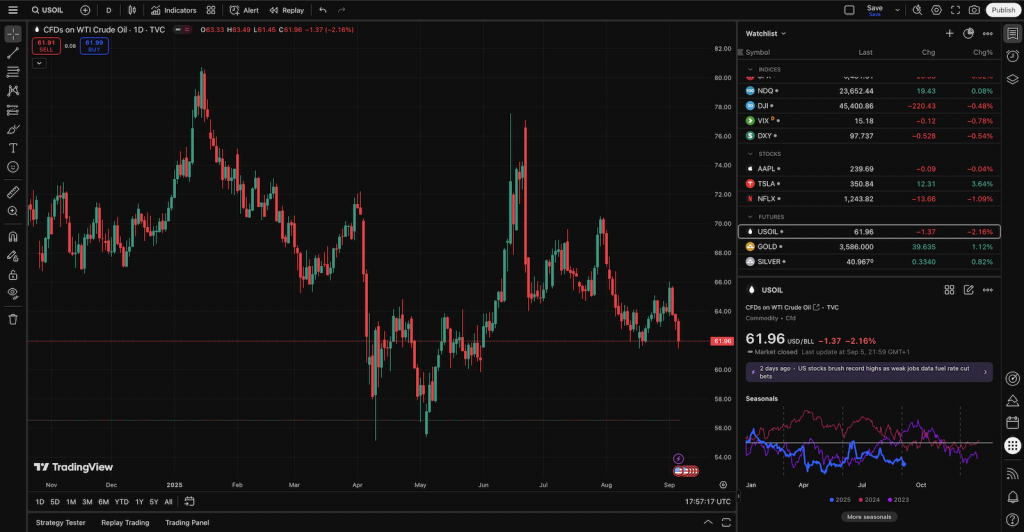
TradingView stays stable for cent account trades, keeping charts and orders reliable
Instrument Range
Not every cent account offers the same instruments as a standard account. Sometimes, only a few forex pairs are available. If your swing strategy needs specific markets, check availability early.
What to look for:
- Access to forex majors and minors.
- Whether metals, indices, or commodities are offered in cent mode.
- Swap and spread details for each instrument type.
The right mix of instruments lets you adapt to changing market conditions.
On my cent account, I realized the choice of instruments was limited—it pushed me to master a few pairs instead of chasing every market.
Risk Management Tools
Swing trading is all about patience, but patience without risk control is risky. Stop losses, take profits, and trailing stops are essential.
What to look for:
- Guaranteed support for stop-loss and take-profit orders.
- Trailing stop functions that work on cent accounts.
- Any limits on the number of orders or modifications allowed.
Deposits & Withdrawals
Most traders use cent accounts to start small. That means you need flexible funding options. If the broker sets high withdrawal minimums, it defeats the purpose.
What to look for:
- Low minimum deposit and withdrawal amounts.
- Clear fee structures for small transfers.
- Reasonable processing times.
Broker Policy On Cent Accounts
Some brokers treat cent accounts as a secondary product, rather than a full trading option. They may restrict features, limit instruments, or raise spreads.
What to look for:
- A cent account that works like a standard account in every way except balance size.
- No restrictions on order types.
- Consistent leverage and execution quality.
The goal is to trade, usually, just with smaller steps.
Final Thoughts
Swing trading with a cent account makes sense for many traders. It allows you to hold trades for days without risking much money, while still working in real market conditions.
However, not all cent accounts are the same. The details—swap costs, spreads, execution, margin rules, and platform stability—shape whether your trades succeed or not. A cent account is only helpful if the broker treats it fairly and provides the same quality as standard accounts.
Take the time to check these points before you choose. The best swing trading broker for cent accounts gives you space to practice, refine your strategy, and trade swing setups with confidence.