
Best Swing Trading Brokers For Funded Accounts 2026



Swing trading with a funded account differs from trading with your own money. The broker you use has to match the way funded programs work. If it doesn’t, you’ll run into limits that can eat into profits or break the rules of your program.
We’ve reviewed the best brokers that work with funded accounts and highlighted the ones that best fit swing trading.
Holding Trades Overnight
Swing traders typically need to keep trades open for several days, sometimes even weeks. Some brokers that work with funded programs don’t allow this. Others charge higher swap or rollover fees.
Before you choose, check:
- Can you hold positions overnight without breaking rules?
- Are there higher costs for long holds?
- Does the program cut leverage for overnight trades?
Weekend Holding Rules
Some funded accounts force you to close positions before Friday’s market close. This eliminates many swing strategies because setups often require days to unfold.
Ask yourself:
- Does the broker allow holding over the weekend?
- Are there special restrictions, such as reduced lot sizes?
- Is there a fee or penalty for leaving trades open?
Leverage & Position Sizing
Swing trading relies less on extreme leverage than scalping. However, leverage still matters because funded accounts often have relatively small balances compared to their targets.
Check for:
- Is leverage high enough to size trades without overexposing?
- Does the program reduce leverage for specific pairs or during news events?
- Are there minimum lot sizes that make risk control harder?
Spread & Swap Costs
Costs hit swing trading in two ways: spreads and swaps.
- Spreads affect entries and exits.
- Swaps matter when holding for days.
Compare:
- Average spread on pairs you trade most.
- Positive vs negative swaps. Some brokers flip them in a way that makes holding expensive.
Low costs keep trades flexible.
On funded accounts I’ve traded, spreads are manageable because entries aren’t as frequent in swing trading. The real drain comes from swaps—holding a position overnight with a negative rate can eat into profit faster than expected. Over the course of a week or two, those charges add up enough to change whether a setup is worth holding.
Slippage & Execution
Execution speed is not just a problem for scalpers. Swing traders often set stop orders or enter around breakout levels. Slippage can cause entries to be pushed further away than planned.
Ask:
- Does the broker maintain stable execution during volatile market conditions?
- How wide is slippage during news or low liquidity?
Data Feeds & Chart Reliability
Swing trading depends on accurate chart history and clean price feeds. Funded accounts sometimes connect to brokers with odd feeds. A candle that appears differently between brokers can alter the entire setup.
Check:
- Does the broker feed match widely used price data?
- Are charts reliable when markets move fast?
- Are there frequent disconnects?
You need charts you can trust to plan entries and exits.
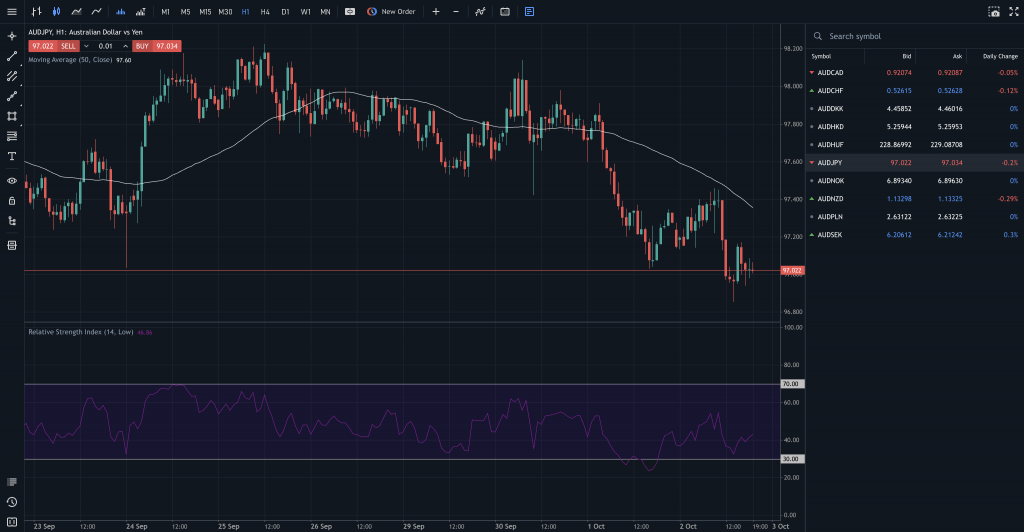
MT5 WebTrader is an easy-to-use platform that runs in your browser
Program-Specific Broker Choice
Some funded account providers lock you into a specific broker. Others give you options. If you’re locked in, the choice is simpler—you work with what’s offered. But if you can choose, weigh the rules against your style.
Key questions:
- Does the funding firm choose the broker, or can you link your own?
- Do you get the exact account terms if you switch brokers inside the program?
- Are demo and live feeds consistent?
Risk Rules That Affect Swing Trades
Funded accounts have rules on daily loss, max drawdown, or news trading. Even if the broker supports swing trades, these rules can block you.
Check for:
- Do daily loss limits reset if you hold trades overnight?
- Is the floating drawdown counted against the daily loss?
- Are there bans on holding through news events?
Instrument Access
Not every broker tied to a funded program offers the same pairs or markets. As a swing trader, you may prefer to trade majors, minors, commodities, or indices.
Look at:
- Are the pairs you trade most available?
- Do exotic pairs come with extreme costs that make swing trades unworkable?
- Is the product list broad enough to find clean setups on a regular basis?
Broker Stability & Support
Funded trading is already stressful due to its strict rules. A broker with unstable platforms or slow support exacerbates the issue.
Consider:
- Does the trading platform crash during peak hours?
- How fast does support respond if something breaks mid-trade?
- Is there a clear record of payouts and withdrawals?
Demo Vs Live Differences
Most funded accounts start with a demo evaluation. Then, if you pass, you move to live or simulated funded accounts. Sometimes, execution, spreads, or swaps change when you go live.
Think about:
- Is execution the same between demo and live?
- Do swap rates shift once you’re funded?
- Are spreads consistent across phases?
Platform Choice
Some brokers only connect with MetaTrader 4 (MT4) or MetaTrader 5 (MT5). Others offer cTrader, TradingView, or proprietary platforms. Swing trading can work on any, but you may prefer one for charting or automation.
Check:
- Is the platform stable for longer-term trades?
- Can you backtest swing setups easily?
- Do you trust the platform data for planning?
Final Thoughts
The best broker for swing trading with a funded account isn’t about big promises or fancy features. It ultimately comes down to whether the broker aligns with your trading style and the rules of the funding program.
If you can hold trades overnight and through weekends, manage costs without spreads or swaps eating into profits, and rely on stable execution and data feeds, then the broker is likely a good fit. It also helps if the platform is stable and the account rules don’t hinder the way swing trades actually play out.
In the end, the right choice is the one that lets you trade the way you already trade—without forcing you to adjust your strategy just to fit the broker. That’s what makes a broker truly suitable for swing trading with a funded account.